- Why It Matters: Pricing impacts your revenue and the quality of employers and candidates you attract.
-
Common Pricing Models:
- Single Post: $50–$400+
- Monthly Subscription: $199–$999
- Premium Packages: $299–$899
-
Key Factors to Consider:
- Understand your niche (e.g., tech, healthcare).
- Analyze competitors' rates and features.
- Calculate operating costs (e.g., hosting, marketing).
- Highlight your platform's unique benefits (e.g., specialized candidate pools).
-
Popular Strategies:
- Start with lower rates to build trust.
- Use tiered pricing to serve different needs.
- Offer extra features like social media boosts or premium recruitment tools to increase revenue.
Quick Tip: Regularly review and adjust prices to stay competitive and align with market trends.
4 Main Factors in Job Board Pricing
Understanding Your Market
Setting the right price starts with knowing your niche inside and out. For example, job boards focused on tech often charge more because of the high demand and competitive salaries in that field.
-
Define Your Niche Segment
- Target industry (e.g., healthcare, technology, education)
- Job level (entry-level, mid-level, executive)
- Geographic focus (local, national, or remote)
-
Assess Market Size and Growth
The U.S. job board market continues to grow steadily, providing opportunities for expansion and pricing adjustments.
Once you understand your niche, the next step is to see how competitors are pricing their services.
Analyzing the Competition
After narrowing down your niche, evaluate the competition. This helps you spot pricing trends and uncover gaps you can fill. For instance, the average cost for a job posting on major boards runs between $100 and $200, with specialized platforms often charging more.
Here’s a simple way to analyze competitors:
| Factor | What to Look For | Why It’s Important |
|---|---|---|
| Price Points | Current rates for similar boards | Sets a baseline for your pricing |
| Value Add | Features and benefits offered | Helps justify higher price points |
| Market Position | Competitor strengths and weaknesses | Shows where you can stand out |
As the Competitive Intelligence Alliance puts it:
"The more you know about how your competitors price their products, and why, the smarter the decisions you'll be able to make about your own pricing."
Calculating Operating Expenses
Understanding your costs is critical for setting prices that ensure profitability. Key expenses include:
- Platform maintenance and updates
- Customer support staffing
- Marketing and advertising efforts
- Payment processing fees
- Server and hosting costs
Regularly reviewing these costs can help you identify areas to save without sacrificing quality. Be sure to account for both fixed costs (like hosting) and variable costs (like customer support) when determining your base pricing.
Defining Your Benefits
To justify your pricing, clearly outline the benefits your platform offers, such as:
- Specialized Candidate Pool: Showcase the quality and relevance of your candidates.
- Advanced Features: Highlight tools that make hiring easier and faster.
- Performance Metrics: Share statistics on success rates or return on investment (ROI).
- Industry Expertise: Emphasize your platform’s deep understanding of the niche you serve.
Tailor these benefits to the audience you’re targeting. For example, if your platform focuses on healthcare jobs, mention features like credential verification or compliance tools that address specific industry needs.
3 Proven Job Board Pricing Models
Single Post Pricing
Single post pricing involves charging a one-time fee for each job listing. This model works well for businesses with occasional hiring needs or those experimenting with new recruitment methods. On average, general job boards charge between $100 and $200 per post. For example, RemoteOK sets its rate at $600 for remote job listings.
Here’s how you can make the most of single post pricing:
| Posting Type | Features | Best For |
|---|---|---|
| Basic Post | Standard listing for 30 days | Small businesses; testing waters |
| Featured Post | Highlighted and premium placement | Filling urgent or competitive roles |
| Bundle Pack | Discounts for 3–5 posts | Companies with occasional hiring needs |
"If your site target low end, hourly workers then companies are only willing to pay lower prices. For them, its a volume recruiting effort so you have to keep prices low in order for them to afford you in the long term. They don't have budgets to pay $300 bucks to fill a cashier position. They might have $50 though."
- Chris Russell
While single post pricing is ideal for sporadic hiring, subscription-based models cater to companies with ongoing recruitment needs.
Monthly and Annual Plans
Subscription pricing offers steady income for job boards and cost savings for employers with frequent hiring needs. Combining monthly flexibility with annual discounts is a common strategy.
For instance, Jobber’s pricing structure reflects this balance. Their "Grow" plan costs $349 per month with monthly billing, but drops to $249 per month with an annual subscription - saving customers $1,200 a year while ensuring consistent revenue for the platform.
Here’s a sample subscription tier breakdown:
| Plan Type | Monthly Rate | Annual Rate (per month) | Best For |
|---|---|---|---|
| Basic | $100 | $85 | Small businesses |
| Standard | $250 | $200 | Mid-sized companies |
| Enterprise | Custom | Custom | Large organizations |
Customizing tiers to meet specific market needs can make subscription plans even more effective.
Basic-to-Premium Options
Tiered pricing allows job boards to appeal to a variety of employers while encouraging upgrades. This model offers flexibility for businesses and boosts revenue potential. Monster’s tiered structure includes:
-
Free Tier
Offers basic listing options for budget-conscious employers. -
Standard Tier
Provides enhanced visibility and flexible daily budgeting. -
Pro Tier
Includes full access to the resume database along with monthly credits.
For niche job boards, this pricing model can generate $10–$30 per application. Premium features often lead to double the visibility of standard postings, making them attractive for employers seeking faster results.
You are pricing your services wrong! Here’s how to price your ...
sbb-itb-316a34c
Building Multi-Level Pricing Plans
Multi-level pricing plans allow for tailored options by offering structured tiers and optional add-ons. These plans cater to different budgets and needs, making them a flexible choice for job boards.
Setting Up Price Tiers
Price tiers should align with your market's budget and requirements. For platforms targeting hourly workers, keep entry-level pricing affordable to match limited recruitment budgets.
| Tier | Price Range | Features | Target Audience |
|---|---|---|---|
| Basic | $100–$200/post | 30-day listing, basic search placement | Small businesses, occasional hirers |
| Standard | $250–$400/post | Enhanced visibility, featured placement, promotion | Mid-sized companies |
| Premium | $500+/post | Priority placement, advanced screening tools, support | Large organizations, specialized roles |
Price Planning Tools
Interactive pricing calculators can simplify the process by factoring in variables like posting duration, industry, role level, and location. For example, ForceBrands uses a credit-based pricing system starting at $185–$250 per credit, with discounts for bulk purchases. They also offer unlimited plans starting at $500 per month. These tools often allow employers to customize their experience by adding extra features, discussed below.
Extra Features and Packages
Offering additional services not only increases revenue but also gives employers more value. Here are some examples:
- Standard Package: Starts at $300 and includes essential posting features with basic visibility.
- Social Media Boost: For an extra $550, employers can promote job listings through targeted social media campaigns, reaching a wider audience.
- Premium Recruitment Services: Advanced options, like pre-screening and initial interviews, are available for approximately $5,500.
To further enhance employer benefits, consider these premium features:
| Feature Type | Description | Benefit |
|---|---|---|
| Enhanced Visibility | Featured listings, homepage placement | Attracts 2× more views than standard posts |
| Candidate Access | Resume database access, saved searches | Direct access to qualified candidates |
| Recruitment Tools | Applicant tracking, screening services | Simplifies the hiring process |
| Employer Branding | Custom profiles, landing pages | Boosts company visibility |
"As your site ages you can raise prices over time but until you establish yourself I suggest keeping prices low. You can always raise them over time as you grow."
Managing Your Pricing System
Using Job Boardly Payment Tools
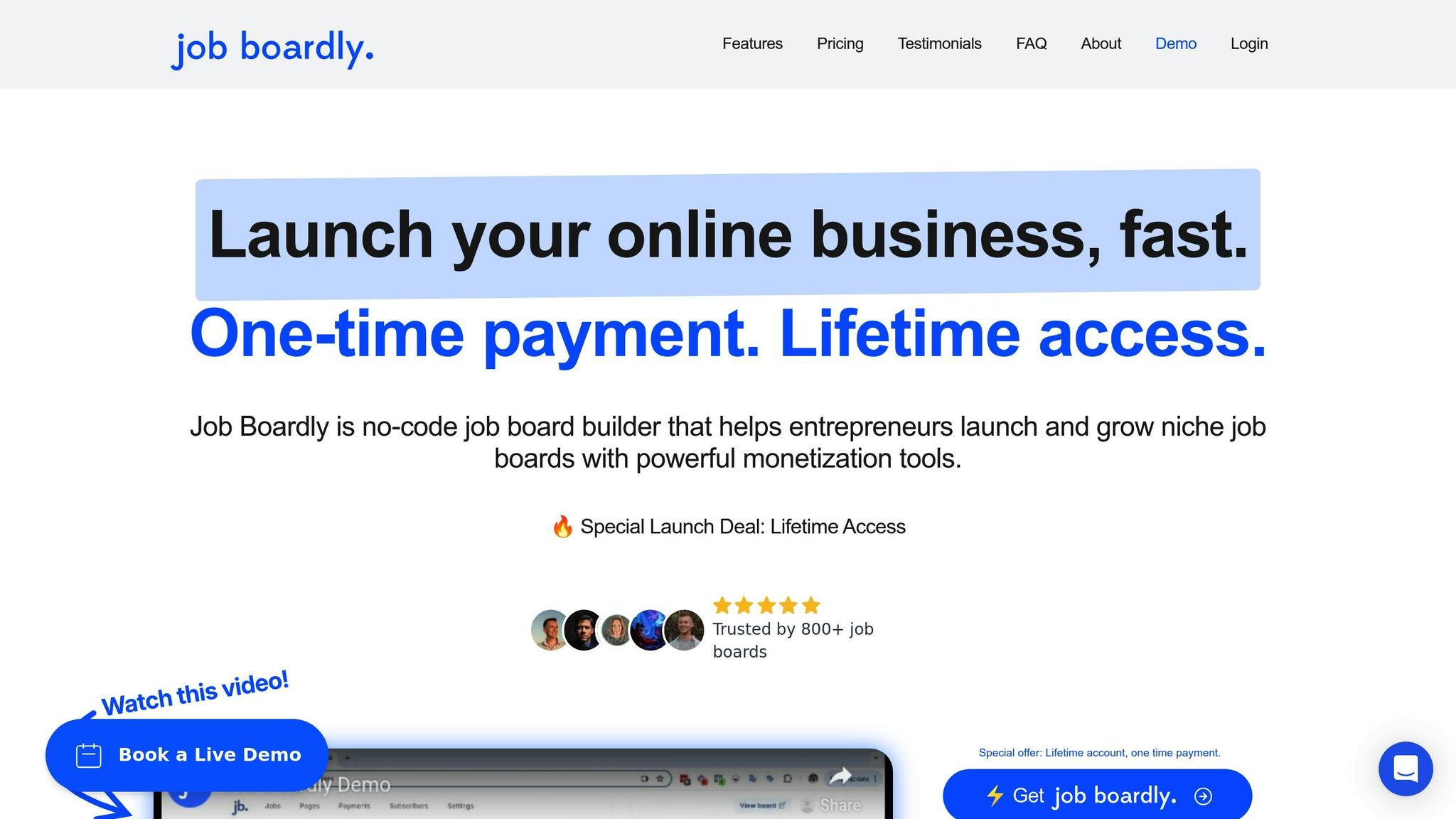
Job Boardly integrates with Stripe to handle payment processing efficiently. Here’s a breakdown of the platform's pricing options:
| Product Type | Description | Best Practice |
|---|---|---|
| Single Posts | One-time job listings | Set base rates between $100 and $200 |
| Job Packs | Bulk posting credits | Provide discounts for bulk purchases |
| Featured Upsells | Enhanced visibility tools | Price higher than the base rate |
| Premium Access | Subscription-based posting | Monthly ($199) or annual ($999) options |
The paywall feature can be activated to limit access to premium job postings, requiring users to purchase a subscription for full access.
Monitoring and Updating Prices
To stay competitive, review and adjust your pricing yearly. Here's how:
- Price Reviews: Compare your rates with industry benchmarks and adjust your pricing to stay aligned with market trends.
- Performance Metrics: Analyze key data like conversion rates, revenue per posting, customer retention, and bulk purchase trends.
- Adjustments: Take inspiration from companies like Disney+, which began with competitive pricing and increased rates as their offerings gained more value.
US Market Requirements
When setting up your pricing, ensure it aligns with U.S. market conventions:
| Element | Format | Example |
|---|---|---|
| Currency | USD with $ symbol | $199.99 |
| Decimals | Period separator | 1,499.00 |
| Thousands | Comma separator | 10,000 |
| Dates | MM/DD/YYYY | 05/02/2025 |
| Time | 12-hour clock | 2:30 PM EDT |
Maintaining consistent pricing formats helps establish trust and professionalism. Additionally, leverage Job Boardly's coupon feature to offer promotional pricing and monitor its success using the platform’s analytics tools.
Conclusion: Next Steps for Pricing
Main Points Review
Setting the right price for job board listings takes thoughtful planning and attention to key factors. With the global online recruitment technology market valued at $15.1 billion, there’s a strong opportunity to generate revenue with a well-structured pricing strategy.
Here are some key considerations:
- Market-Based Pricing: Niche boards can charge higher fees if they consistently deliver qualified candidates.
- Value Metrics: Employers are willing to pay more for listings that bring in top-quality applicants.
- Revenue Streams: Use a mix of single posts ($100–$200), subscription plans ($199/year), and premium features to maximize earnings.
These insights can help you establish effective pricing and grow your revenue.
Getting Started
Here’s how you can put these ideas into action:
- Set Your Base Rates: Start with competitive pricing. Industry data suggests listings can be priced around $600 for at least 200 guaranteed views. Adjust your rates based on your niche and audience.
-
Offer Tiered Plans:
Provide flexible options for employers by introducing tiered pricing. For example:
Tier Price Features Basic $199/year Standard job postings One-Time $395 one-time Permanent access to core features Enterprise Custom pricing Bulk postings, featured listings, priority support -
Enable Payment Tools:
Use tools like Job Boardly’s Stripe integration to streamline payments. These tools allow you to:
- Process transactions securely
- Restrict premium content to paying users
- Offer discounts with promotional codes
- Monitor conversions to refine your strategy
"The more qualified applicants you bring, the more you can charge employers per job posting." - JBoard
FAQs
How can I set the right pricing strategy for my job board based on my industry and audience?
To set the right pricing strategy for your job board, start by understanding your niche and target audience. Research your industry to gauge employer demand and determine how much they’re willing to pay. Niche job boards often command higher prices by offering access to a highly qualified and specific talent pool.
Analyze competitors to see what similar job boards are charging and identify opportunities to stand out. Consider different pricing models, such as fixed fees, subscriptions, or pay-per-click options. You can also offer premium services like featured listings or employer branding to add value.
Start with competitive pricing to attract users, then adjust as your platform grows. Always focus on delivering value to employers by emphasizing the quality of candidates and results they can expect from your job board.
How can I compete with established job boards while staying profitable?
To compete effectively with established job boards and maintain profitability, focus on niche specialization by targeting a specific industry or audience. This helps attract highly qualified candidates and provides more value to employers. Offering tiered pricing options or discounts for bulk listings can also appeal to a broader range of businesses.
Enhance your platform with value-added services like featured job postings, resume database access, or employer branding tools. Prioritize a seamless user experience with intuitive navigation and an easy application process. Finally, invest in marketing strategies such as SEO, social media, and email campaigns to increase visibility and attract both job seekers and employers.
How can I adjust my job board pricing to stay competitive and cover rising costs?
To keep your job board pricing competitive and aligned with operational costs, start by analyzing your niche market. Understand what employers in your target audience are willing to pay and how competitors price similar services. Adjust pricing based on demand, competitive trends, and the value you provide.
Factor in your operational expenses and consider offering flexible pricing models, like tiered plans or volume discounts, to appeal to a wider range of employers. Adding premium features, such as highlighted listings or employer branding options, can justify higher prices while providing more value.
Stay adaptable - review your pricing regularly to ensure it reflects market trends and supports your revenue goals. By balancing competitive pricing with quality services, you can attract employers while maintaining profitability.